

The RT-3S handles analog (FM and FM Narrow) and DMR programming. The MD-9600 Radio Programming Software makes it easy for you to get all these channels programmed into your radio. Other settings of the radio are saved in the settings file. These include settings specific to:
This radio requires more than just memory management. The Programmer handles everything you need to get on the air. |
|
 The programming process begins by first installing the program and then connecting the radio for driver installation. In most DMR radios, the USB electronics are in the radio. The RT Systems programs work with these on-board electronics of the radio. Drivers are installed with the programmer.
 Save your file as you work. This is a computer, after all, and you would hate to lose your work should the system fail. Actually, create and save as many files as you want or need: you are not limited to one file. Remember, radio programming is an overwrite process. Everything in the radio is replaced by everything in the file. |
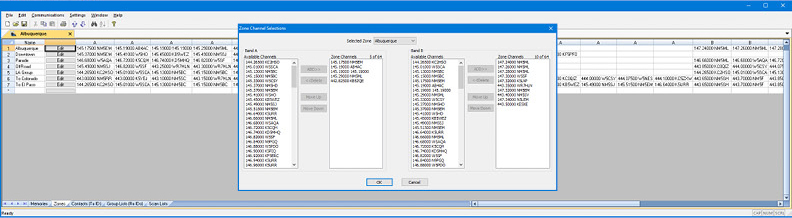 |
Zones (analog and DMR) Organize your memory channels into “groups” (known as zones in this radio) to get your best use as you turn through the list. You might want a zone for home, another for at your vacation home, another for the 3K fun run where you direct traffic. When a zone is selected, the radio knows only those channels. |
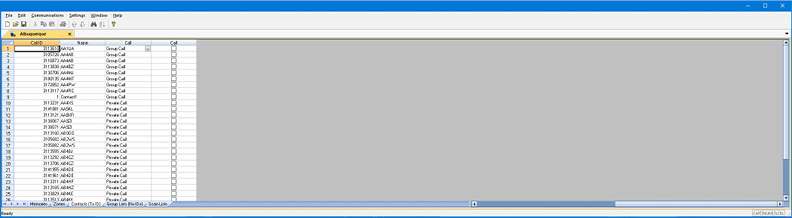 |
Contacts (DMR) A list of people or groups to whom you can talk. This list can be customized with the ID and name of folks you want identified when you talk to them. This list can include talk groups from repeater systems (DMR-Marc, Brandmeister, or TGIF) which can be found through Internet searches. |
 |
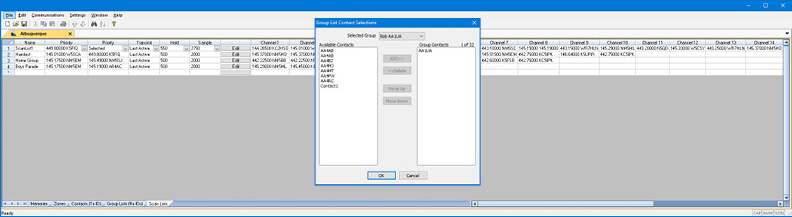
Group Lists Now that you have all those contacts, you don’t want to miss hearing all the conversations. The Contacts can be collected into Group Lists to give you the ability to listen for lots of conversations at once time. Enter a name for the group. Then click Edit to easily add up to 32 Contacts to this Group. |
 |
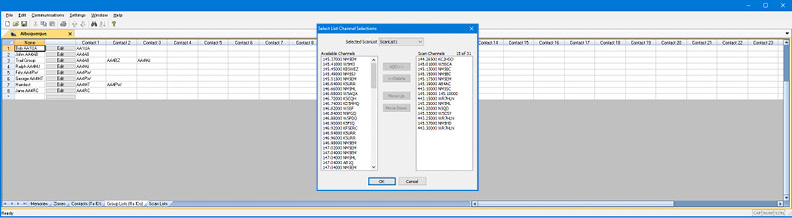
Scan Lists Set up groups of memory channels for scanning. The same channel can be added to several lists or can be omitted completely from scanning. Organize your channels to include only those you need for your current activity. |

Radio Menu Settings Customize many set menu features of the radio. Check boxes toggle features on or off, drop down menus list all selections, and blank boxes for personalized entry add to the ease of setting up your radio exactly like you want it. The entries on the Settings screens are made for you to "Set and Forget". Once settings are customized, you are prompted to save before exiting. The saved settings will be there every time you create a new frequency file. |
 | Radio Info Customize these options to get the best performance from your radio. | |
 | Common Customize other set menu features of the radio. Check boxes toggle features on or off, drop down menus list all selections and blank boxes for personalized entry add to the ease of setting up your radio exactly like you want it. | |
 | Menu Menu options for Contacts, Radio Check, Call Log, Menu Hang Time and Utilities can be toggled on or off here. . | |
| Key Settings Select a menu option that is access through the Programmable keys on the face of the radio. Customize these keys to access the functions you need most often. | |
 | Quick Messages Enter text to transmit with minimal button presses. Short phrases such as "Low on gas" or HELP… STUCK" or "I'm hungary" can say it all if someone can't hear you. |
 | GPS System Use this screen to select options for the GPS System. | |
